Jingdezhen Handicraft Porcelain Industry Sites Inscribed as China’s 61st UNESCO World Heritage Site
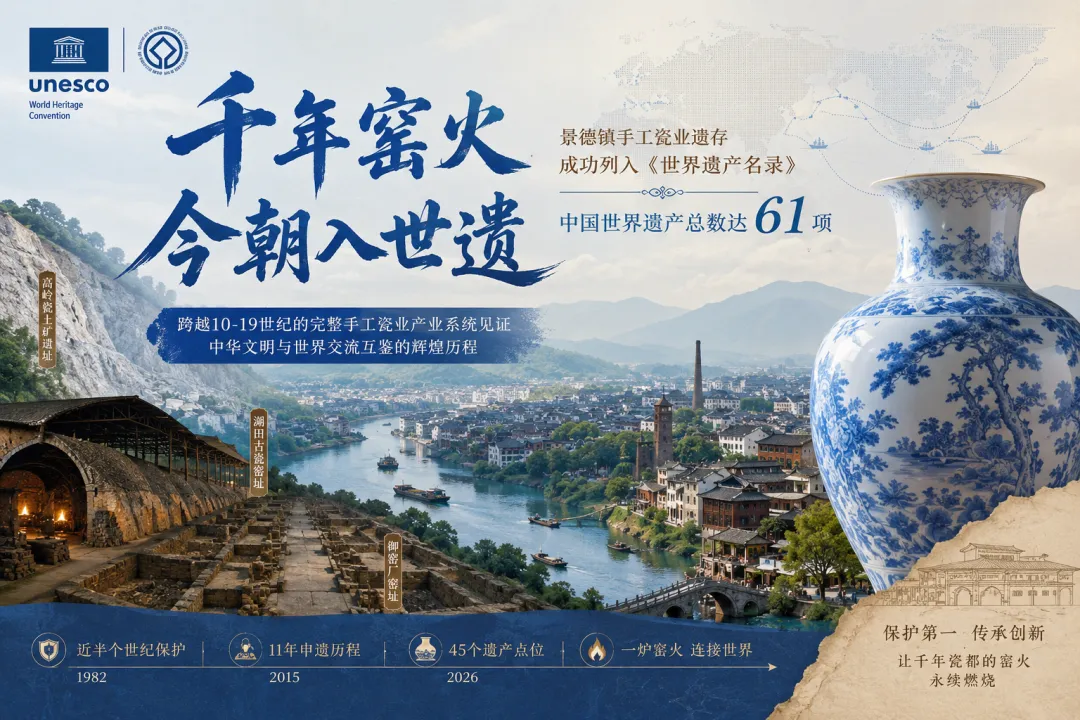
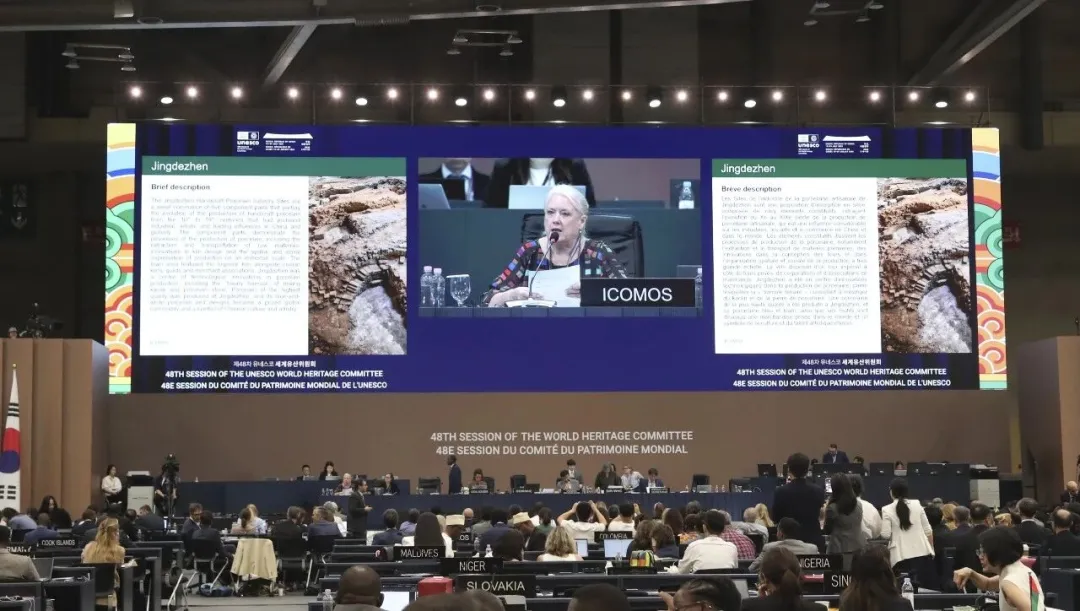
uring the 48th Session of the UNESCO World Heritage Committee in Busan, South Korea, the “Remnants of Jingdezhen Traditional Ceramic Industry” was officially inscribed on the UNESCO World Heritage List. This landmark addition brings the total number of World Heritage sites in China to 61.
Representing the complete traditional handmade porcelain production system of Jingdezhen from the 10th to the 19th centuries, the property covers 1,979 hectares, supported by a buffer zone of 5,545.7 hectares (totaling 7,524.7 hectares). As UNESCO highlighted during the evaluation:
“Since the 16th century, Jingdezhen became the center of world handmade porcelain production.”
A Millennium of Kiln Fires: The World’s Ancient Ceramic Capital
Unlike traditional single-monument sites, Jingdezhen presents a complete, intact ecosystem of ancient industrial production. The property encompasses 5 main component areas, 15 heritage element groups, and 45 individual heritage points:
- Town Production Center: Imperial Kiln Site, Luomachang Kiln Site, and Guanyinge Kiln Site, demonstrating the sophisticated division of labor between imperial and private production.
- Raw Material and Fuel Supply Areas: Gaoling Kaolin Mine Site, Changling Porcelain Stone Mine Site, Dawukeng Porcelain Stone Mine Site, Xiaowuli Valley Mining & Processing Site, and Jiaotan Kiln Firewood Fuel Supply Area—reflecting sustainable ecological wisdom summarized by the ancient practice of “leaving mother trees so fallen seeds form forests.”
- Transportation Networks: An interconnected system of docks and ancient land routes linking mountains and waterways, transporting raw materials and finished porcelain across the world.
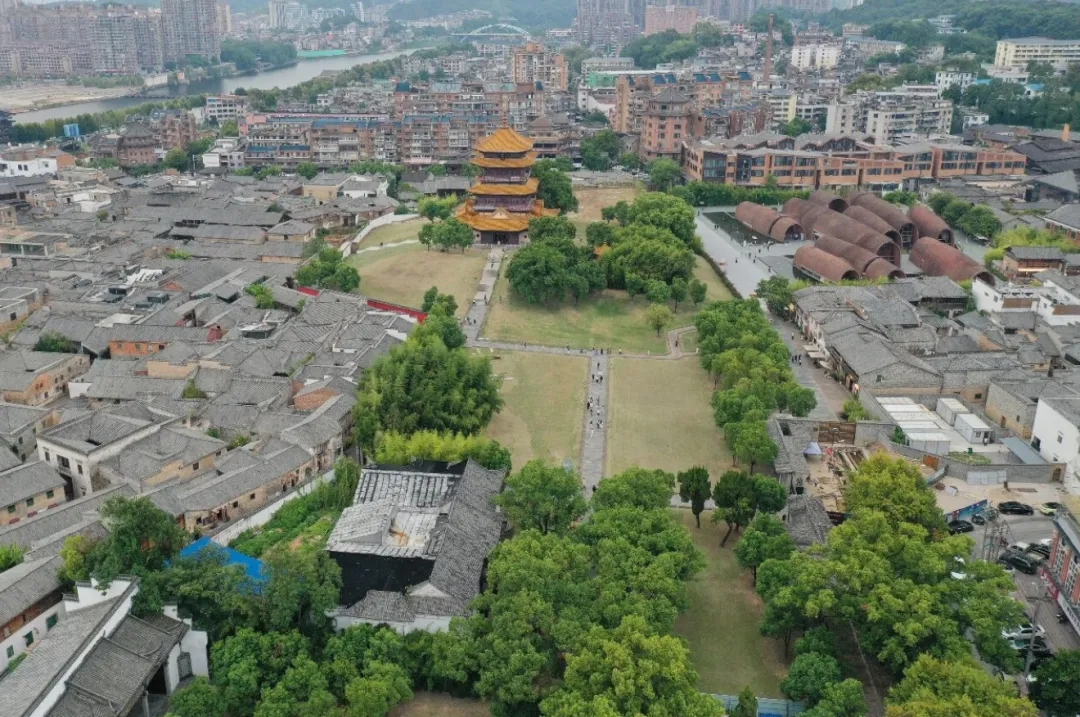
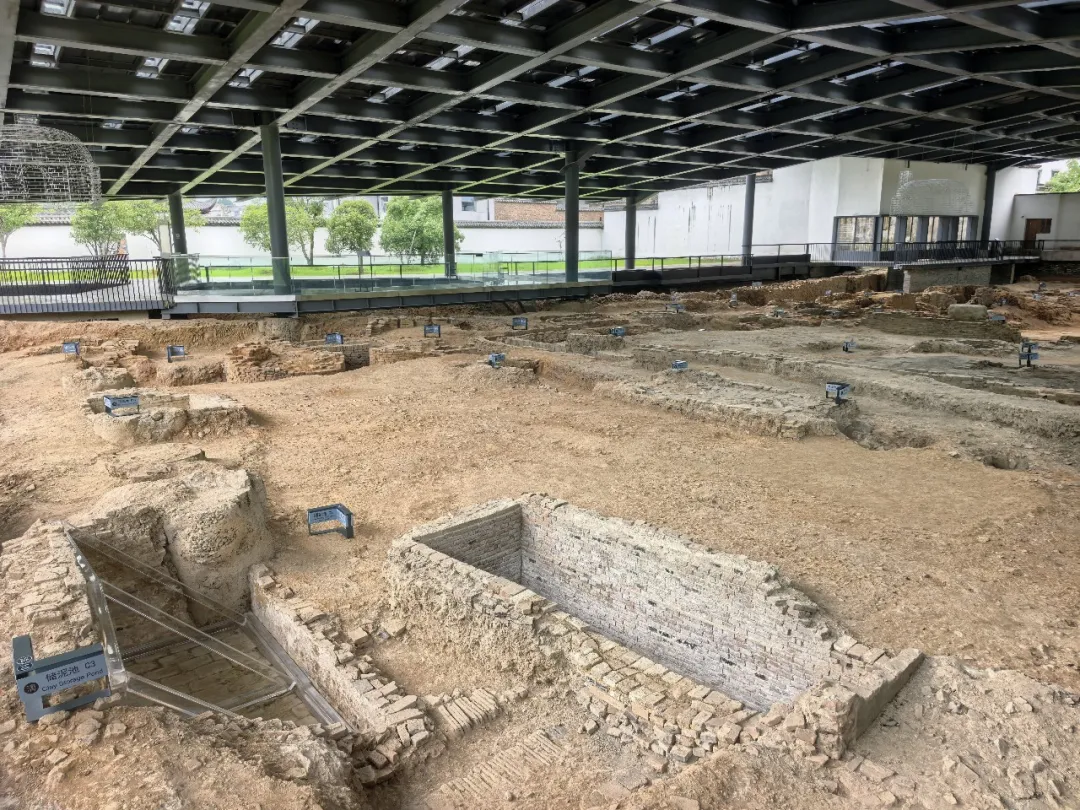
Decades of systematic archaeological excavations—revealing ancient kiln structures, porcelain shard mounds over 10 meters high, and historic wharves—have unveiled the full supply chain of this ancient manufacturing hub.
From Song Dynasty qingbai porcelain (“thin as paper, blue as the sky, bright as a mirror, resonant as a chime”) to the blue-and-white porcelain of the Yuan and Ming dynasties, Jingdezhen has continuously driven the global expression of Chinese craftsmanship.
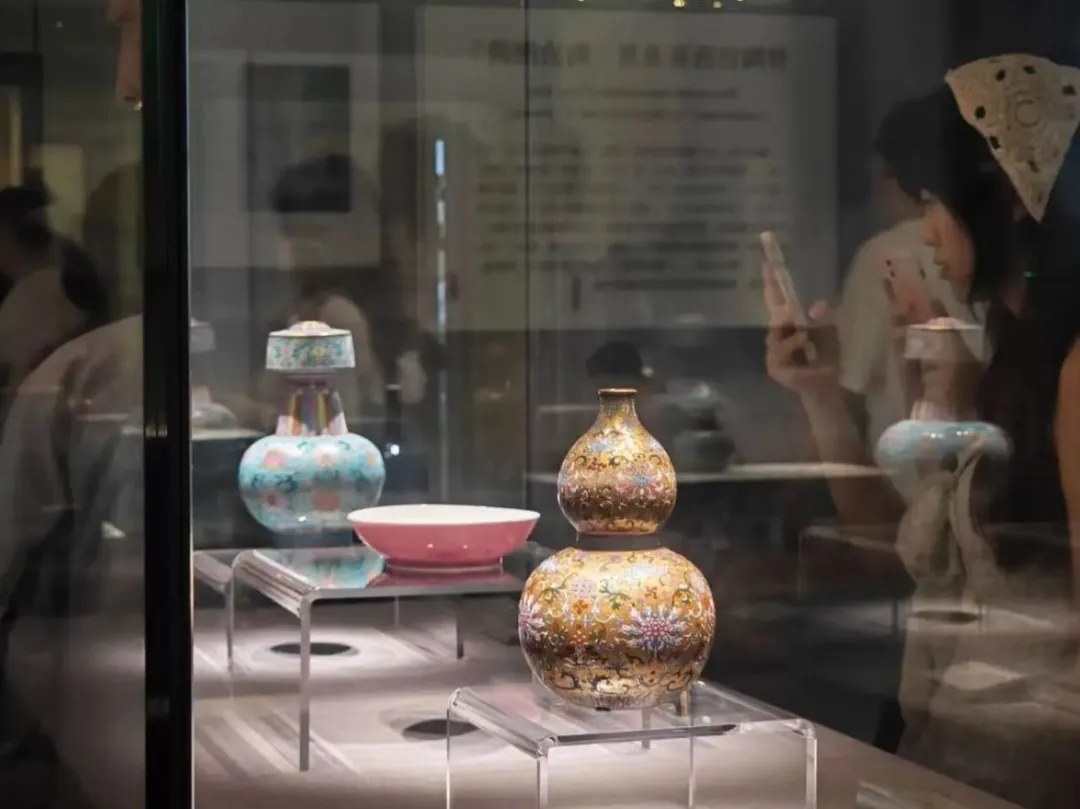
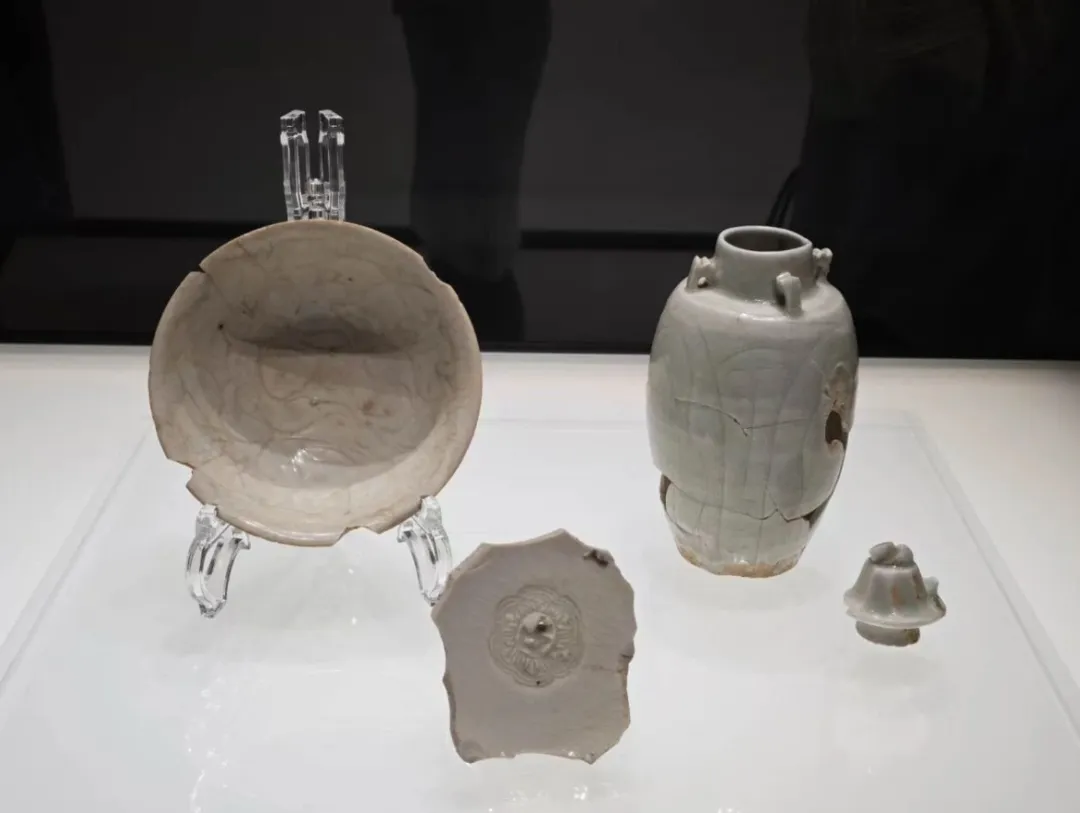
The site met four distinct UNESCO World Heritage criteria:
- Criterion (ii): Exhibits an important exchange of human values in ceramic industry development, technology, and art from the 10th to 19th centuries.
- Criterion (iii): Provides a unique testimony to the continuous production process and complete industrial layout of China’s handmade porcelain industry.
- Criterion (iv): Represents an outstanding example of innovation in porcelain technology, art, and industrial organization models from the 13th to 19th centuries.
- Criterion (vi): Serves as an important symbol of Oriental art, driving the global expression of Chinese civilisation.
Deep-Sea Shipwrecks and Global Connections
Jingdezhen’s legacy embodies the historical phrase: “Craftsmen come from all directions, and porcelain travels across the world.”
This deep international legacy was recently underscored approximately 600 meters underwater in the Skagerrak Strait off southern Norway, where an 18th-century merchant vessel loaded with Chinese blue-and-white porcelain was discovered. Cross-referencing samples with Jingdezhen’s Ancient Ceramic Gene Bank—a high-tech database and digital monitoring platform mapping ceramic physical attributes—confirmed that the shipwreck’s porcelain matches early Qianlong-period (Qing Dynasty) items from Jingdezhen across floral patterns, cobalt tones, glaze, and porcelain body characteristics.
This discovery, alongside vast quantities of export porcelain shards excavated in Jingdezhen, traces a clear global trade route: from the Changjiang River into Poyang Lake, along the Yangtze River to the coast, and onto the Maritime Silk Road. During the 17th and 18th centuries, a craze for Chinese porcelain swept British society, prompting Ming Dynasty artisans to create specialized export porcelain—such as Kraak porcelain—to match European tastes. Porcelain fragments from Jingdezhen have also been unearthed in various parts of Africa.
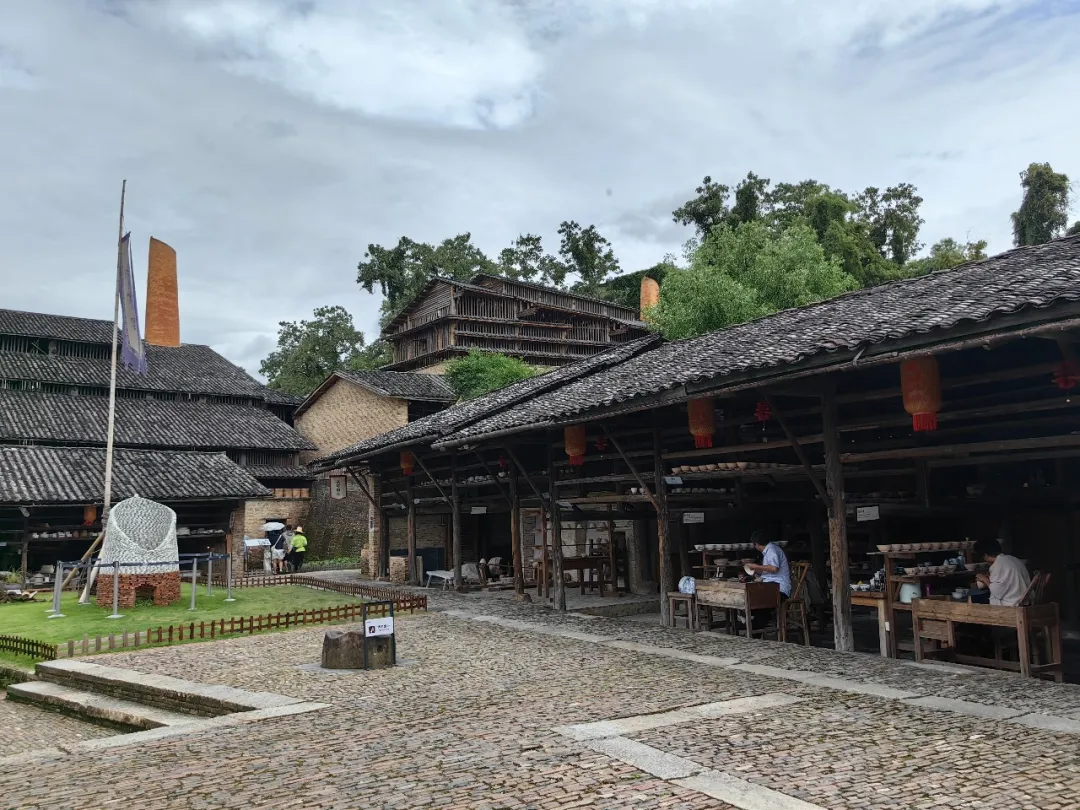
Today, Jingdezhen remains a dynamic living cultural center. The city continues to preserve its traditional 72-step handcrafting process, with over 100,000 residents—nearly a quarter of its urban population—employed in the ceramic sector.
Hundreds of thousands of young artisans honor traditional techniques while incorporating modern aesthetics and contemporary lifestyles into their creations. At the same time, Jingdezhen attracts thousands of international creators and influencers from over 60 countries who come to pursue their art.
“This UNESCO inscription is not only a milestone for heritage protection, but also a vital bridge for deepening international cultural exchange,”
CNTO London warmly invites travel enthusiasts, cultural media, and visitors from the UK and around the world to explore Jingdezhen in Jiangxi Province, experience the enduring mastery of the thousand-year ceramic capital, and share in this shared treasure of human civilization.