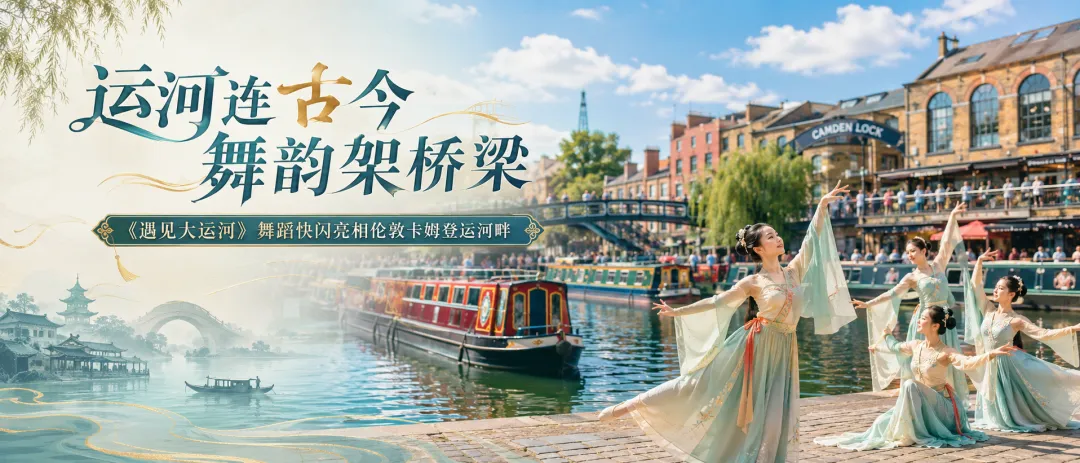
Canals Connect Past and Present, Dance Builds Bridges: “Meet the Grand Canal” Flash Mob Appears in London to Celebrate UN International Day for Dialogue among Civilisations
On 9 June, London enjoyed fine and sunny weather. The waters of the Camden Canal glistened as colourful barges rested quietly by the banks amidst lush greenery, unfolding a leisurely British waterfront atmosphere. Right within this picturesque canal landscape, a stunning dance flash mob from the East took the stage.
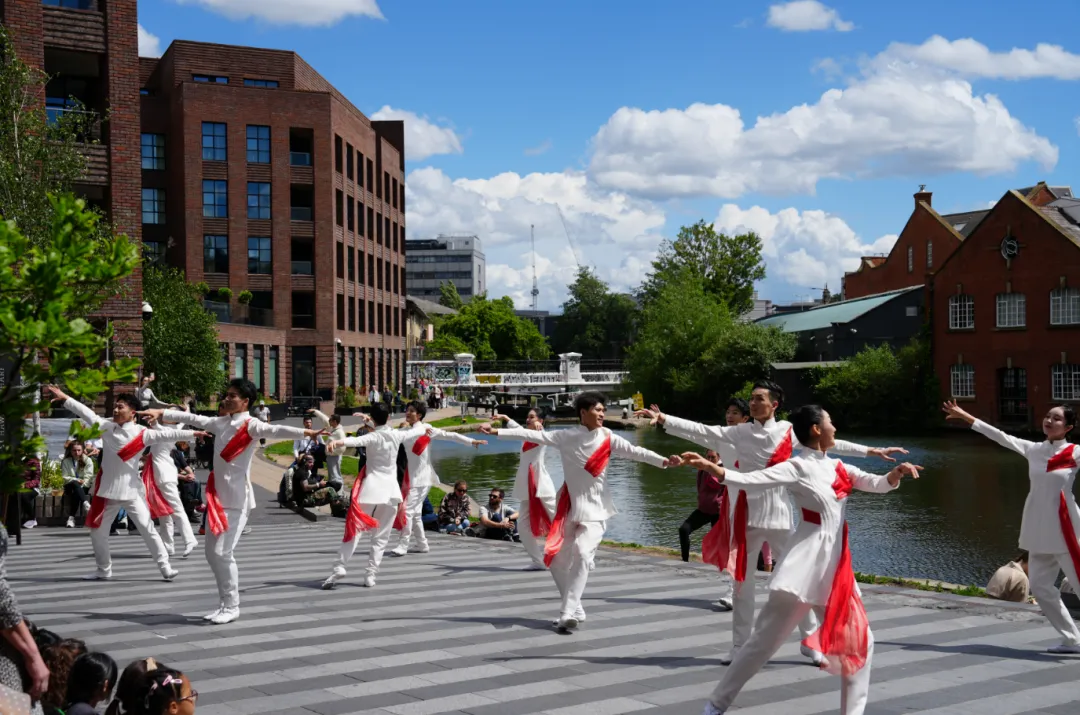
Nearly 30 young dancers from the Jiangnan water towns, dressed in elegant traditional Chinese-style attire, danced by the water and moved gracefully to the music. They brought the millennium-long rise and fall of the China Grand Canal, along with the gentle and elegant charm of the Jiangnan water towns, to this British waterfront filled with Western romance.
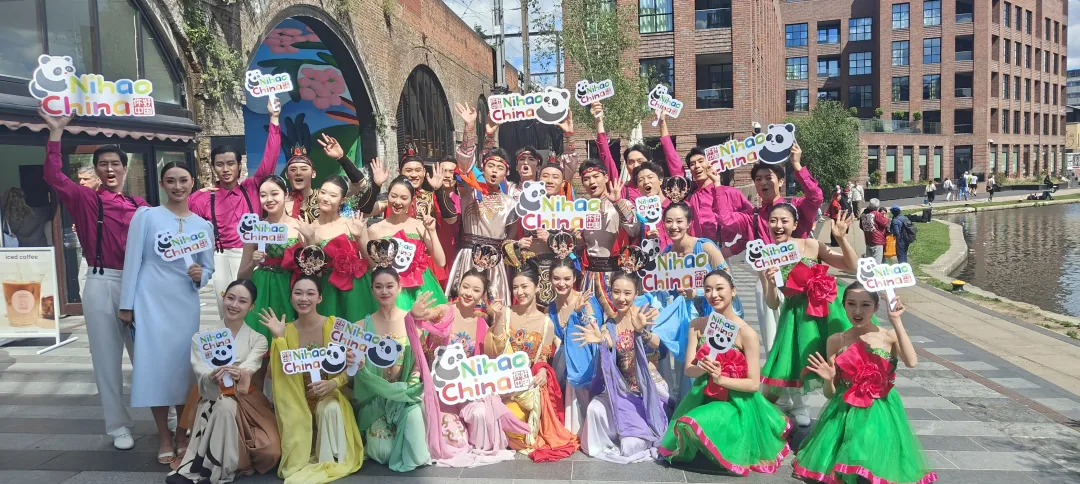
The event was hosted by the China National Tourists Office (CNTO) London, with the Hangzhou Opera and Dance Theatre delivering a passionate performance of highlights from the classic dance drama Meet the Grand Canal. The event coincided with the arrival of the third UN International Day for Dialogue among Civilisations (10 June).
It also forms an important component of the overseas promotion of the “Nihao! China” national tourism brand, serving as a vivid practice of cultural and tourism cooperation between China and the UK.
Two Canals Meet, Civilisations Look Upon Each Other
If the River Thames is the surging urban artery of London, then the criss-crossing canals around the Camden area are the city’s quiet and elegant cultural threads. Built during the Industrial Revolution and shaped by over a century of history, these waterways have long shed their busy freight-carrying past to become a wonderful place for residents to stroll, cycle, and experience the hustle and bustle of daily life.
Echoing this from afar, the Beijing-Hangzhou Grand Canal of China carries a starkly different historical weight. First excavated during the Spring and Autumn period and stretching across more than 2,500 years, this ancient canal is the world’s largest and longest artificial waterway. As its southern terminus, Hangzhou thrived due to the canal and flourished alongside it. The millennium-old water artery carries not just blue waves, but also the continuous Chinese cultural lineage and urban memory.
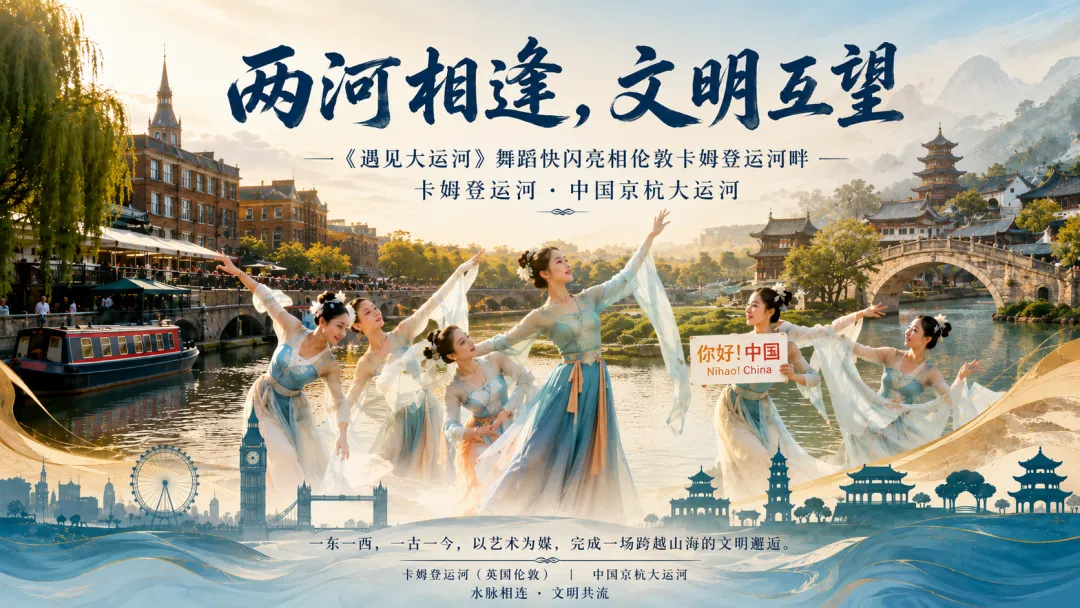
Two canals, East and West, ancient and modern; at this moment, using art as a medium, they completed an encounter of civilisations that spans mountains and seas.
Arriving Gracefully, Eastern Poetry Enters Britain
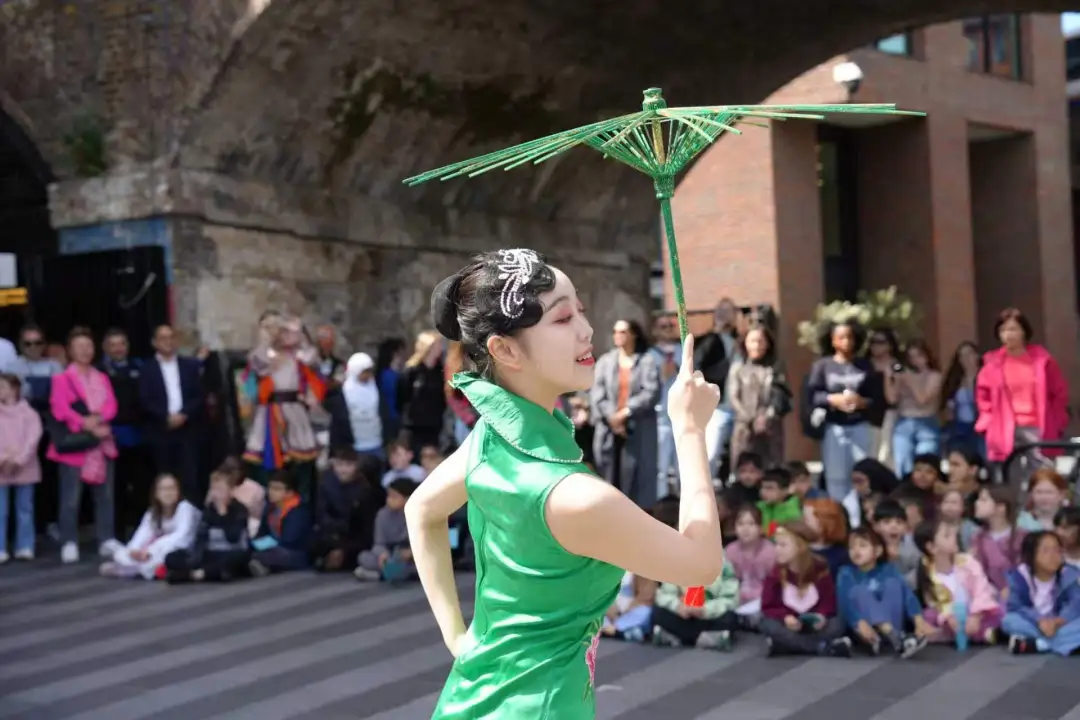
At the event scene, dancers holding “Nihao! China” logo signs danced by the waterside of the Camden Canal. Their light, supple movements and elegant, majestic choreography told the stories of the Grand Canal over time, quickly attracting a large number of local residents and international tourists to stop and watch, record the moments with their devices, and engage in passionate discussions.
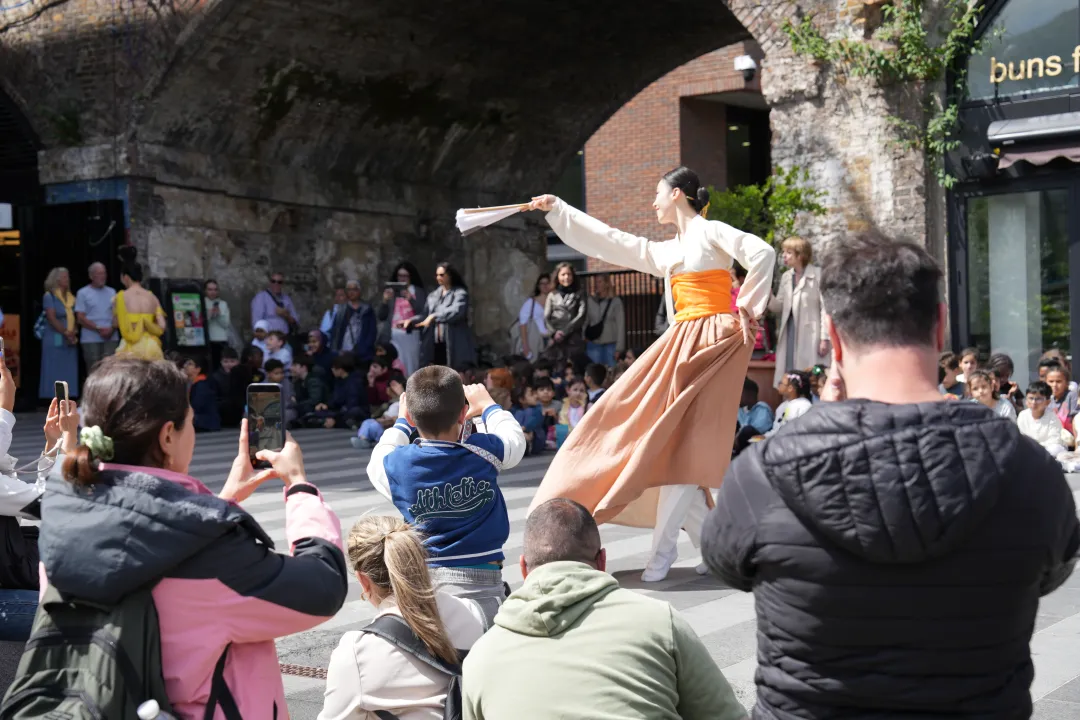
Sarah, a resident living in Camden, praised from the bottom of her heart: “It is wonderful to encounter such elegant Chinese dance by the canal I know so well. The flowing water, the fresh breeze, and the classical dance movements blended into one, making me feel as though I was instantly transported to a poetic Eastern water town.”
A European tourist stated: “This is my first time watching Chinese classical dance up close. The movements are gentle yet full of strength. Being able to understand the story of an ancient canal through dance is profoundly moving.”
Many young British spectators admitted that this flash mob completely shattered their stereotypes of Chinese culture. The romantic and healing traditional Chinese art filled them with a deep yearning for China’s canal scenery and its splendid culture and tourism.
Ten Years of Craftsmanship, A Living Canal Epic
Meet the Grand Canal is China’s first original dance drama focusing on the communication of cultural heritage. It premiered in Hangzhou in 2014 and has toured extensively at home and abroad over the past decade.
Jointly created by renowned director and choreographer Cui Wei and Hollywood composer Klaus Badelt, the drama is divided into four major chapters: “Excavation”, “Prosperity”, “Oblivion”, and “Seeing the Canal Again”, completely outlining the millennium-long rise, fall, and transformation of the Grand Canal.
The work integrates Eastern and Western forms of artistic expression, innovatively creating an immersive performance model that links the stage with the audience, allowing the concepts of cultural heritage protection and inheritance to spread further with every performance.
Using Dance as a Medium, Everlasting Dialogue among Civilisations
The hosting of this event is a vivid interpretation of the spirit of the UN International Day for Dialogue among Civilisations. In June 2024, the 78th session of the United Nations General Assembly adopted China’s initiative, officially establishing 10 June each year as this international day, advocating for equal exchange and joint development among different civilisations across the world.
CNTO London took this flash mob as an opening chapter, interweaving the cultural memories carried by the two canals of China and the UK, allowing Eastern aesthetics to grow naturally on Western soil and enabling the dialogue among civilisations to genuinely take place through art.
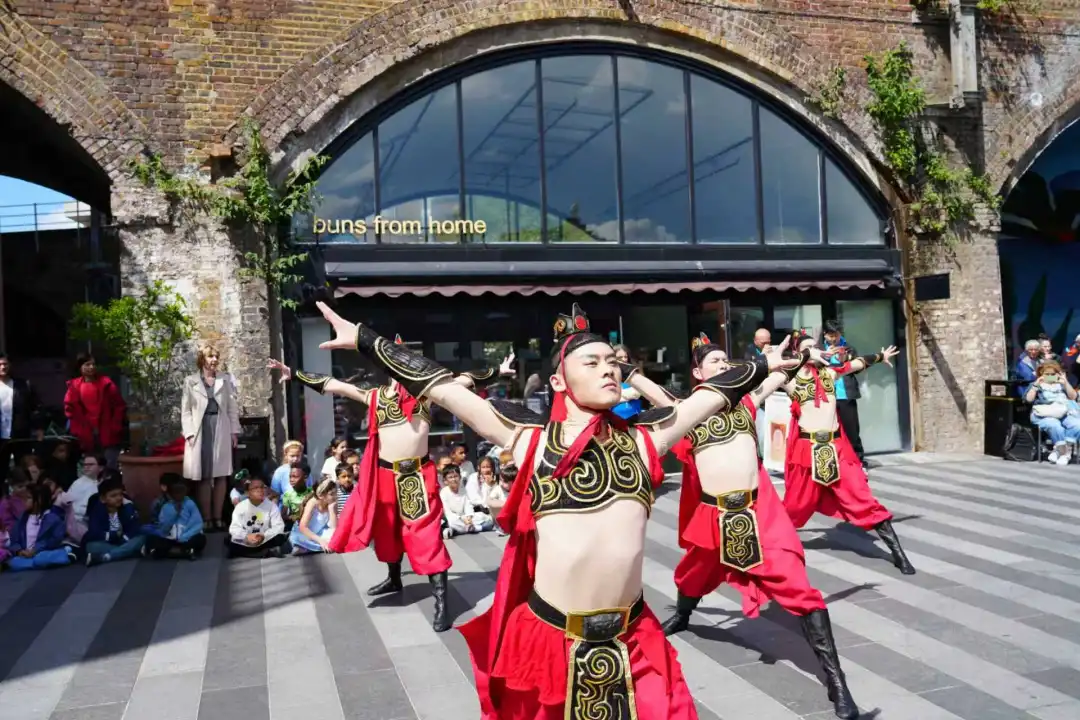
Passing down cultural lineage through dance, building a golden bridge across canals. Looking ahead, CNTO London will successively launch a series of activities, including a Dragon Boat Culture Exchange, the Duanwu Dragon Boat Festival, art lectures, and the Cambridge Dragon Boat Festival. It will continue to build a high-quality platform for mutual learning between Chinese and British civilisations as well as cultural and tourism cooperation.
Relying on the “Nihao! China” brand, it aims to deepen cultural and people-to-people exchanges between the two countries, allowing the friendship between China and the UK to remain ever-new through year-on-year interactions.